Who is the UFC Foot Collector? Understanding Valter Walker’s Heel Hook Dominance

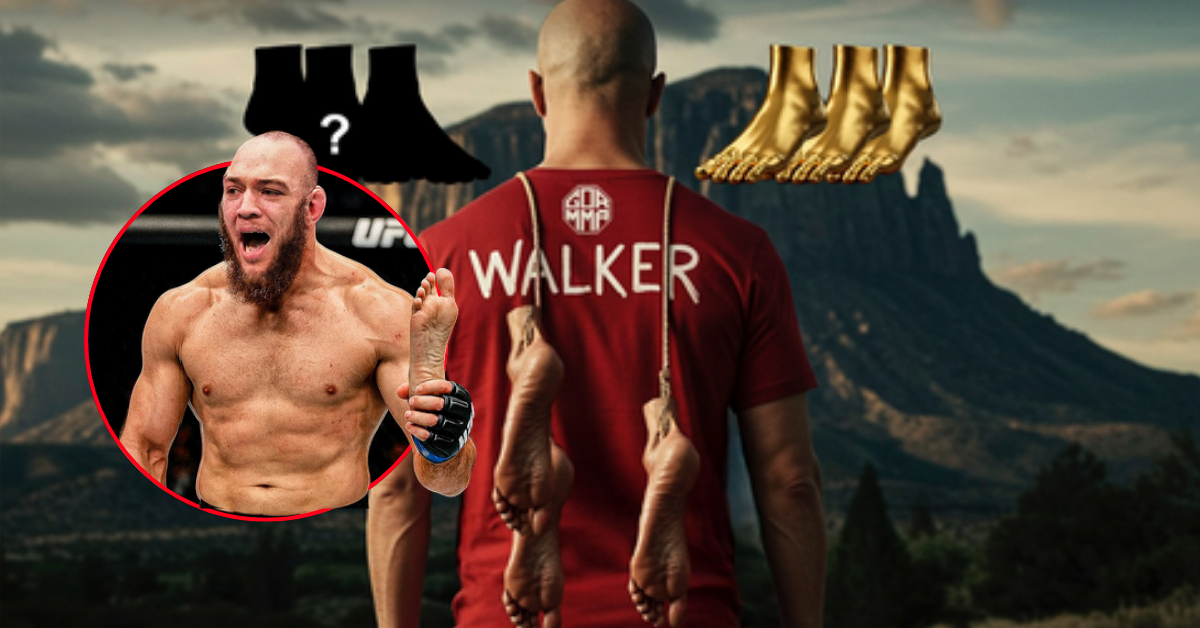
Valter Walker has earned an unconventional title within the heavyweight division. Fans and commentators alike have taken to calling him the “Foot Collector” following his historic run of consecutive heel hook submissions in the Ultimate Fighting Championship. The Brazilian fighter, standing 6’6″ and training out of GOR MMA in Moscow, has managed something unprecedented at heavyweight in 2025: three straight first-round submission victories, all via the same finishing technique.
The UFC Foot Collector: Understanding Valter Walker’s Heel Hook Dominance
Walker’s submission record stands apart because heel hooks remain a rarity at heavyweight, where striking power and traditional wrestling have historically dominated the division. Prior to Walker’s emergence, the record for most heel hook finishes at heavyweight stood at two. Walker’s accomplishment now positions him just one heel hook away from matching Rousimar Palhares’ all-time UFC record of four heel hook submissions — a distinction Palhares holds across all weight classes.
What makes this even more remarkable is the compressed timeline in which Walker achieved these finishes, executing each submission within the opening round across UFC on ESPN 70, UFC Fight Night on ESPN 179, and UFC 305 respectively.
Before stepping into the cage, Walker examines his opponent’s physical profile with a specific criterion: flat-footedness. In interviews following his victories, Walker has explained that fighters with flat feet struggle to defend against heel hook attacks because the ankle positioning creates vulnerability that can be exploited through rotation and torque.
Walker’s first consecutive heel hook finish came against Junior Tafa at UFC 305 on August 17, 2024, where he secured a verbal submission at 4:56 of the first round. The circumstances surrounding this victory generated some debate within the MMA community regarding whether Tafa had genuinely tapped or had simply declined to continue, but the victory nonetheless extended Walker’s undefeated UFC record to 9-0 at that point.
His second heel hook finish followed on February 15, 2025, against Don’Tale Mayes, a 14-6 fighter in MMA, when Walker forced a tap at just 1:17 into round one. The speed of this submission impressed observers familiar with leg lock defenses at the professional level.
The third and potentially most significant heel hook came on July 12, 2025, when Walker faced Kennedy Nzechukwu at UFC on ESPN 70 in Nashville. Nzechukwu brought legitimate credentials to the bout as a 14-6 fighter known for knockout ability and confidence since transitioning to heavyweight.
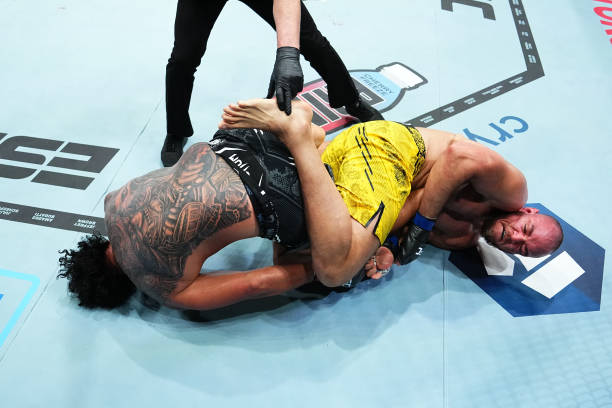
After a quick takedown and brief scramble, Walker inverted his body position, placing himself in what grapplers call the heel hook position. The inversion allowed Walker to control Nzechukwu’s heel while leveraging his own body weight against the ankle joint. Nzechukwu tapped in desperation after just 54 seconds. Commentary from analysis of the submission noted the textbook nature of Walker’s execution, with immediate inversions and a complete absence of defensive options for Nzechukwu.
The heel hook submission targets the ankle joint through rotational pressure applied primarily to the heel, creating stress on both the ankle and knee complex. Unlike submissions that can be powered through with muscular strength, the heel hook’s effectiveness derives from leverage and anatomical constraint rather than raw force.
The technique proves particularly devastating because the defending fighter cannot generate sufficient counterforce to escape through strength alone once the positioning has been established. This biomechanical reality explains why Walker can finish significantly larger and more experienced strikers who might normally rely on physical advantages. Heel hooks entered UFC consciousness most prominently through the work of leg lock pioneers like Dean Lister and later through controversial figure Rousimar Palhares, but remained relatively uncommon at heavyweight until Walker’s recent emergence.
View this post on Instagram