UFC Staple Joe Rogan Remains Silent as Comedians are Silenced – Jimmy Kimmel and Stephen Colbert Fired

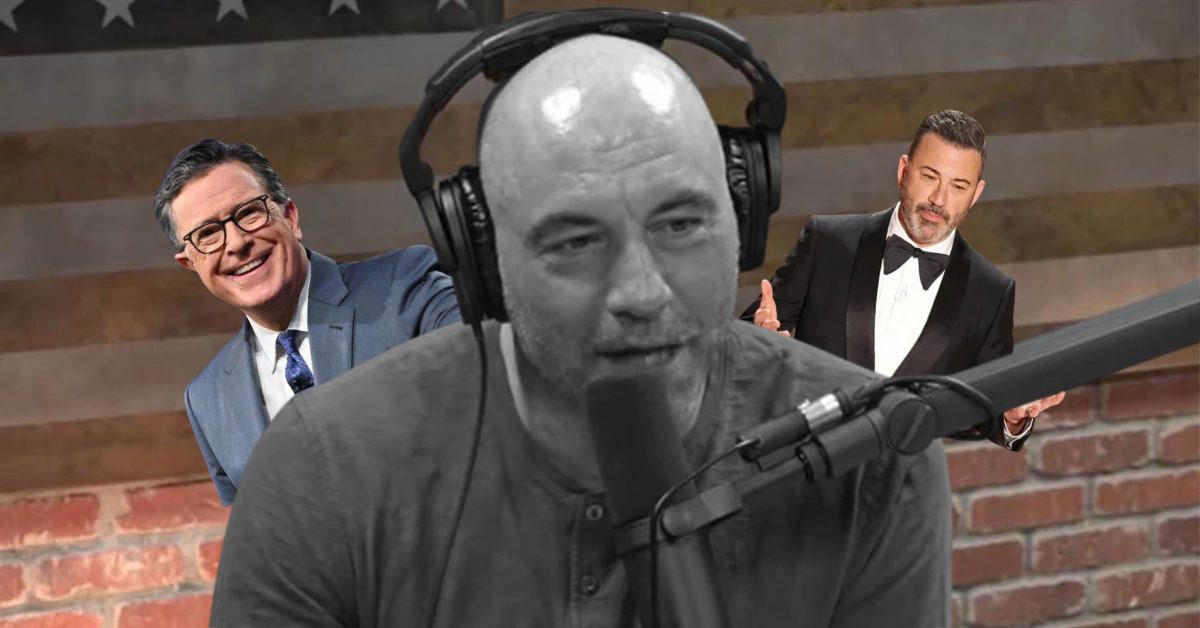
UFC commentator and podcast host Joe Rogan has not publicly addressed the recent suspension of Jimmy Kimmel or the earlier cancellation of Stephen Colbert’s programs, despite his long-standing advocacy for free speech in comedy.
The silence marks a notable departure for Rogan, who has consistently positioned himself as a defender of comedians against censorship pressures. ABC indefinitely suspended “Jimmy Kimmel Live!” on September 17, 2025, following controversial comments Kimmel made about the assassination of conservative activist Charlie Kirk. CBS had previously announced the cancellation of “The Late Show with Stephen Colbert” in July 2025.
The Jimmy Kimmel Suspension
Disney-owned ABC pulled Kimmel’s show after the host suggested during his September 15 monologue that supporters of former President Trump were trying to distance themselves from Tyler Robinson, the 22-year-old charged with Kirk’s murder. “The MAGA gang is trying to characterize this kid who murdered Charlie Kirk as anything other than one of them,” Kimmel stated.
The suspension came after Federal Communications Commission Chairman Brendan Carr, a government employee, threatened action against ABC’s affiliate licenses. Nexstar Media Group, which operates numerous ABC affiliates, announced it would preempt Kimmel’s show, describing his comments as “offensive and insensitive at a critical time in our national political discourse.” This is the government deciding what can be said on television.
Brendan Carr has served on the Federal Communications Commission since 2017, after being nominated by President Donald Trump and confirmed by the Senate that year. In November 2024, Trump named Carr as FCC chairman, a post he assumed upon Trump’s January 2025 inauguration. Carr is widely regarded as an ally of Trump, having contributed to the conservative Project 2025 blueprint and repeatedly aligning his regulatory agenda with Trump’s calls to rein in “Big Tech” and challenge perceived liberal bias in broadcast media.
The Stephen Colbert Cancellation
CBS announced in July that “The Late Show with Stephen Colbert” would end in May 2026. The decision followed Colbert’s criticism of his parent company Paramount for settling a lawsuit with Trump for $16 million. The cancellation occurred during Paramount’s merger with Skydance, which requires government approval. It is an example of the government deciding what can and can’t be said on television.
Evidence indicates that CBS’s decision to end The Late Show with Stephen Colbert was driven at least in part by political pressure related to its parent company’s dealings with the Trump administration. The cancellation was announced just days after Colbert publicly criticized Paramount’s $16 million settlement with former President Trump over an allegedly edited “60 Minutes” interview – a deal widely viewed as a “big fat bribe” designed to smooth the way for Paramount’s pending Skydance merger, which requires Federal Communications Commission approval under Trump-appointed Chairman Brendan Carr.
These changes coincide with intensified political scrutiny of liberal-leaning comedian hosts, suggesting a pattern of censorship across network television, with pressures from the government’s FCC.
Joe Rogan’s Free Speech Philosophy
Joe Rogan has repeatedly emphasized the importance of protecting comedians from censorship. “If you make a joke that’s politically incorrect and then they write it down, you have to explain it – we’ve automatically exited the realm of jokes,” he has said.
Joe Rogan spoke out in 2015 when the government of Venezuela was shutting down comedians.
The podcast host opened Comedy Mothership in Austin specifically to create a space where comedians could perform without fear of repercussions. “Everyone’s afraid to speak up. Everyone’s afraid to speak out. Having a place like this where folks can come and joke around and have a good time, and not fear repercussions or fear that they’re not going to be booked again,” Rogan explained.

Joe Rogan said:
“Tim Walz said that the First Amendment doesn’t apply to misinformation or hate speech. Okay, well it certainly does.”
“Free speech is meaningless unless you allow people you don’t like to say things you don’t like.”
“I’ve had more people furious at me for what are clearly jokes than ever at any other time in my career. This is the hardest thing right because you make something that’s clearly a joke and then somebody writes down the transcript of the joke and now you have to explain the joke right that immediately kills it because as soon as you explain a joke it’s no longer a joke.”
Rogan has a major fear of a certain demographic being silenced:
“It keeps going further and further and further down the line, and if you get to the point where you capitulate, where you agree to all these demands, it’ll eventually get to straight white men are not allowed to talk. Because it’s your privilege to express yourself when other people of colour have been silenced throughout history.”
Rogan’s approach to comedy and free speech is rooted in what scholars have termed “roast universalism” – the idea that comedy should be able to target anyone and anything without restrictions. He has positioned himself as defending an endangered art form, claiming there are only about 250-500 legitimate comedians left worldwide who are willing to push boundaries.
Comedian Mike Birbiglia spoke out:
“I’ve spent a lot of time in public and private defending comedians I don’t agree with. If you’re a comedian and don’t call out the insanity of pulling Kimmel off the air – Don’t bother spouting off about free speech anymore.”
Political Context
The actions against both hosts occurred during a period of heightened political tension following Kirk’s assassination on September 10, 2025, at Utah Valley University. Kirk was shot while addressing a crowd of 3,000 people during his “American Comeback Tour.”
Robinson was arrested after confessing to his father and faces capital murder charges. Prosecutors said he had developed an “obsession” with Kirk and was “radicalized over the internet.”
The Trump administration has used the incident to pressure media companies, with officials threatening broadcast licenses and calling for action against personalities who make comments they deem inappropriate.
Industry Response
Free speech advocates have criticized both network decisions as capitulation to government pressure. MSNBC host Chris Hayes called the Kimmel suspension “the clearest assault on free speech from government actors that I have ever witnessed.”
“The most anti-free speech administration of my lifetime and it’s not even close.” Luke Thomas
“Trump’s DOJ deleted a study about the rise of far right violence in America. Meanwhile, Trump baselessly smears so-called “far left” critics and threatens to unleash the government on them. Make no mistake: Trump’s sole focus is suppressing dissent & consolidating more power.”
California Governor Gavin Newsom charged that Republicans “are censoring you in real time” through coordinated efforts, including “acquiring and managing media outlets, dismissing commentators, and canceling programs.”
Rogan’s Continued Silence
Despite his platform reaching millions and his stated commitment to defending comedians and free speech, Rogan has not addressed either situation publicly. His silence comes as comedians face pressure from the government over their political commentary.