
“I’m Not Saying It’s a Racket, But It’s A Racket” Big John McCarthy To California State Athletic Commissioner

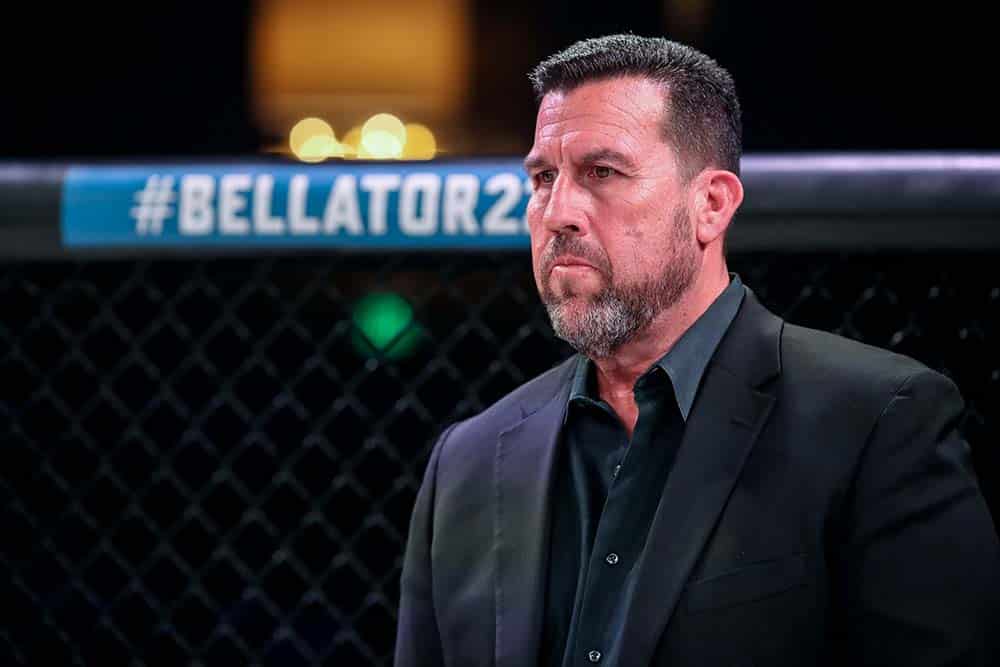
The current Executive Director of the California State Athletic Commission, Andy Foster, joined Big John McCarthy as a guest on the show while regular co-host Josh “The Punk” Thomson was away.

During the introduction, McCarthy highlighted that Foster is a former MMA fighter and congratulated him on receiving his black belt in Brazilian Jiu-Jitsu earlier this year. Foster noted that the journey from brown to black belt took nearly twenty years.
The conversation progressed into a deeper discussion about the key differences between MMA and Boxing sanctioning. With the head of a major athletic commission on the show, it was a timely opportunity to examine the pros and cons of how both sports are regulated and how proposed changes could affect fighters, promoters, and the sport as a whole.
Big John asked,
“What is it that a fighter needs to go through to actually get that fight sanctioned and put together? Based on sanctioning fees for the sanctioning bodies, what are the steps that need to be taken?”
Foster replied,
“A lot of steps, John. Sometimes one promoter will have one fighter under contract, while the other promoter has the other fighter. A lot of times, one promoter’s fighter will have one of the belts. Let’s use the WBO as an example. And the other promoter’s fighter may have two of the belts. What that means is that the sanctioning bodies don’t always agree on who the top fighters are.”
He went on to describe to McCarthy the process of belt unification in boxing and how difficult it can be to align the interests of all involved.
“It’s pretty complicated. That’s why we don’t see it very often,” he added.
McCarthy then addressed the financial structure of boxing in comparison to MMA:
“If you’re a fighter for an MMA promotion and you get the opportunity to fight for the belt, the promoter doesn’t charge you anything. You don’t pay for the belt. You don’t pay for the opportunity. I’ve looked at some of these fees. Jermell Charlo was going to fight for multiple titles and was set to make a million dollars. Right off the top, the sanctioning bodies. I’m not going to name names.”
Big John continued. “One was charging thirty thousand dollars, another thirty thousand, and the cheapest one was twenty thousand. That all comes out of his purse. He’s paying them for the right to fight for those titles. That doesn’t happen in MMA. In boxing, you’re not only paying to fight, but you’re also paying for the belt. Am I wrong?”
After a brief pause, Foster replied,
“No, that’s the way it works.”
McCarthy laughed and continued,
“I don’t want to say it’s a racket, but it’s a racket. I understand what the sanctioning body is for, Andy, but are they truly needed? It’s the promoter that puts the fight on. The promoter is the one who takes the financial risk. And in today’s world, it’s getting harder and harder for promoters to make things happen. There’s no HBO anymore, no Showtime Boxing, no ESPN for most fights. But the sanctioning body is guaranteed to make money. Am I right or am I wrong?”
Foster, slightly flustered, began to answer before McCarthy jumped in again,
“I’ll just say I’m right. You don’t have to say anything.”

Sanctioning Fees, Title Inflation, and the Fight for Boxing’s Future with Big John
Foster responded,
“Some of these fees and purses are tied to the sanctioning body belts. The fee correlates to the belt that’s on the line. There’s value for a fight to have that. That’s one of the benefits I saw. Since 1996, we’ve seen an increase in the number of belts given out by organizations. This makes it difficult for the public to know who the true boxing champion is.”
He also commented on the changing economics of the sport, particularly regarding broadcasting.
“I don’t use the term drying up, but there’s less and less TV money to go around. I think that’s a fair thing to say. At least here in California, there’s less TV money. I’m not talking about the Kingdom of Saudi Arabia.”
This conversation with Big John McCarthy brought to light the growing tension between financial sustainability and regulatory integrity in professional boxing. While MMA has streamlined many of its business practices under centralized promotions, boxing continues to wrestle with fragmented governance and costly sanctioning processes.