Exclusive | “Created Our Own Lane Here”: Eric Bischoff on How RAF Bridges WCW, WWE and UFC

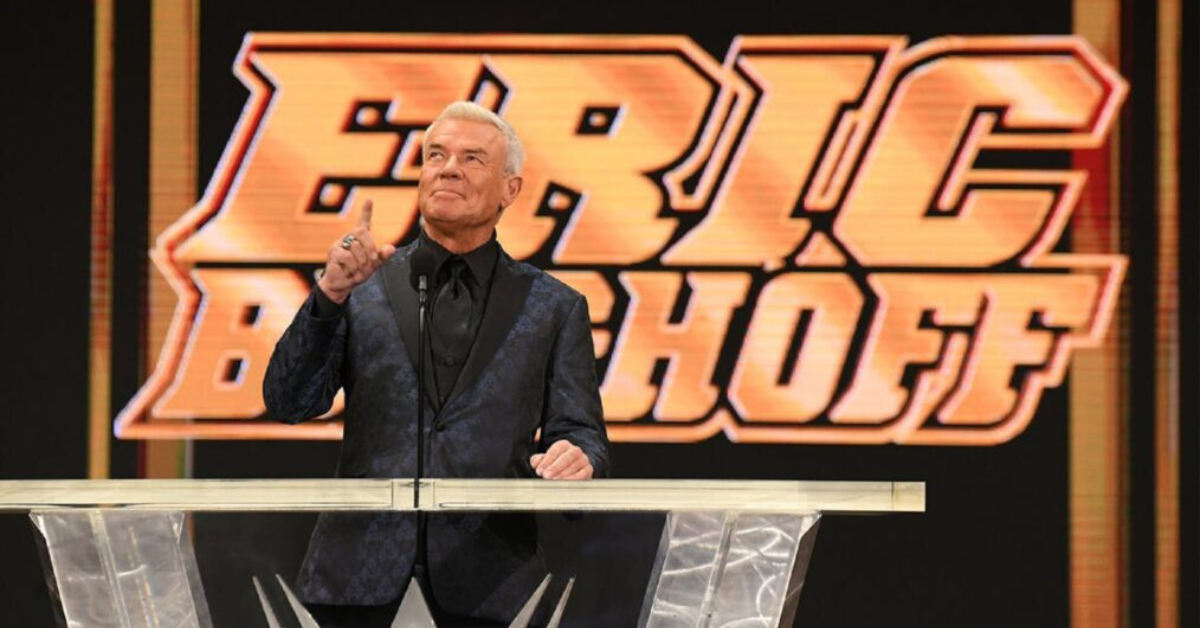
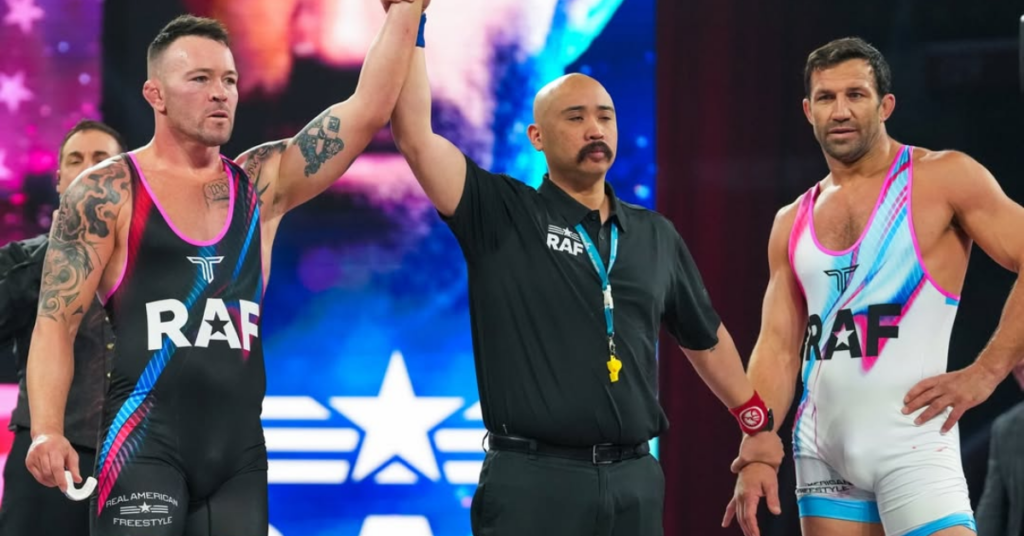
Real American Freestyle Wrestling is Eric Bischoff’s newest experiment in blending live television, combat sports and show production, and he is very open about where the DNA comes from. Drawing on his years running WCW Monday Nitro and later producing for WWE, Bischoff frames RAF as a freestyle wrestling league built on a TV “recipe” that fans of wrestling and MMA will recognize, even if the sport itself stays unscripted and competitive.
Real American Freestyle has moved quickly from concept to a steady live product, carving out a niche with fans who want real results packaged like a big‑league show.
Bischoff has talked about strong interest from wrestling and MMA fans, a growing digital footprint and a talent pool that includes both seasoned freestyle standouts and younger prospects looking for a platform between the Olympic cycle and MMA, which all point to RAF gaining traction as an experiment that is starting to work.
Eric Bischoff is best known as the executive who took WCW Monday Nitro head‑to‑head with WWE Raw in the 1990s, helping launch the New World Order angle and briefly turning WCW into the industry leader. He later held on‑screen and backstage roles with WWE, contributing to production and creative before moving into podcasting and media projects built around his experience in television wrestling. Along the way he has worked as a promoter, producer and talent, giving him a perspective that spans business, creative and live‑event operations.
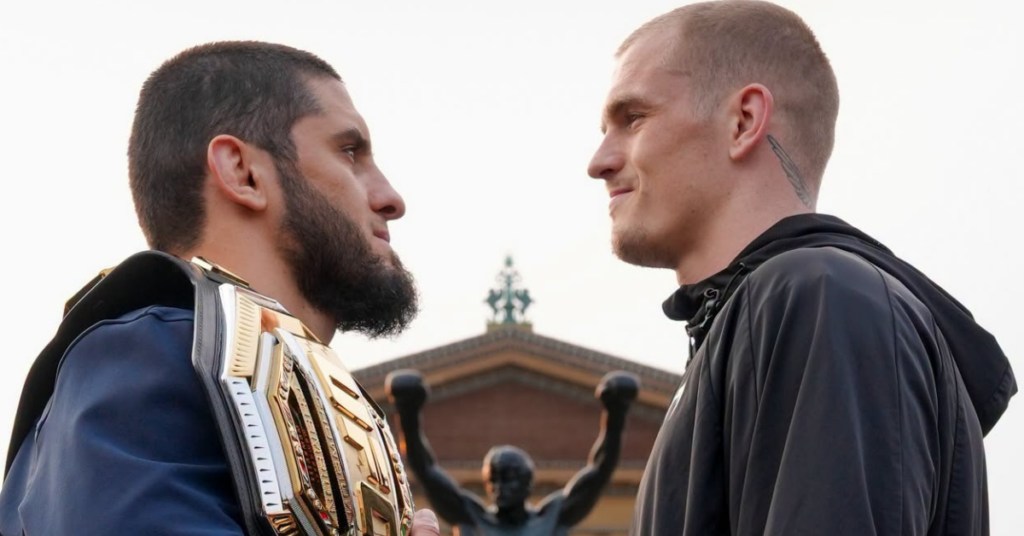
Real American Freestyle matches stream exclusively on FOX Nation, with the next live event, RAF 08: Dvalishvili vs. Cejudo, set for April 18, 2026 at Philadelphia’s Liacouras Center.
That mix is what he now brings to Real American Freestyle, treating it as the next test case for everything he learned in the Monday Night War era. In this sit-down interview he breaks it all down with LowKick MMA’s Tim Wheaton.
Eric Bischoff: Bringing WCW Nitro to the mat
When asked what aspects of WCW he is carrying into Real American Freestyle, Bischoff goes straight to structure. He does not talk first about stars or storylines, but about how the show is mixed together.
“The most obvious thing is the format of the show itself. The format is like the recipe: what are all the ingredients that go into the show, when do you add them, how long do you stir them, how long do you cook them. It is a little bit like making a very complicated cake.”
In his view, RAF borrows heavily from the live-event templates refined in WCW Nitro, WWE and even UFC, with timing, segment flow and production beats planned to keep casual viewers engaged and core fans satisfied. He sees modern UFC broadcasts as converging on a pro-wrestling style layout, and RAF leans into that.
“A lot of the elements of our format are elements that I used on Nitro, or that you see in WWE or UFC. We are taking a little bit of the best of those formats, really, most of it from WWE. If you look at the UFC, that format is very much like a WWE format. It is not as complicated, there are not as many moving parts, but it is pretty much the same format. You will see that same formula in RAF.”
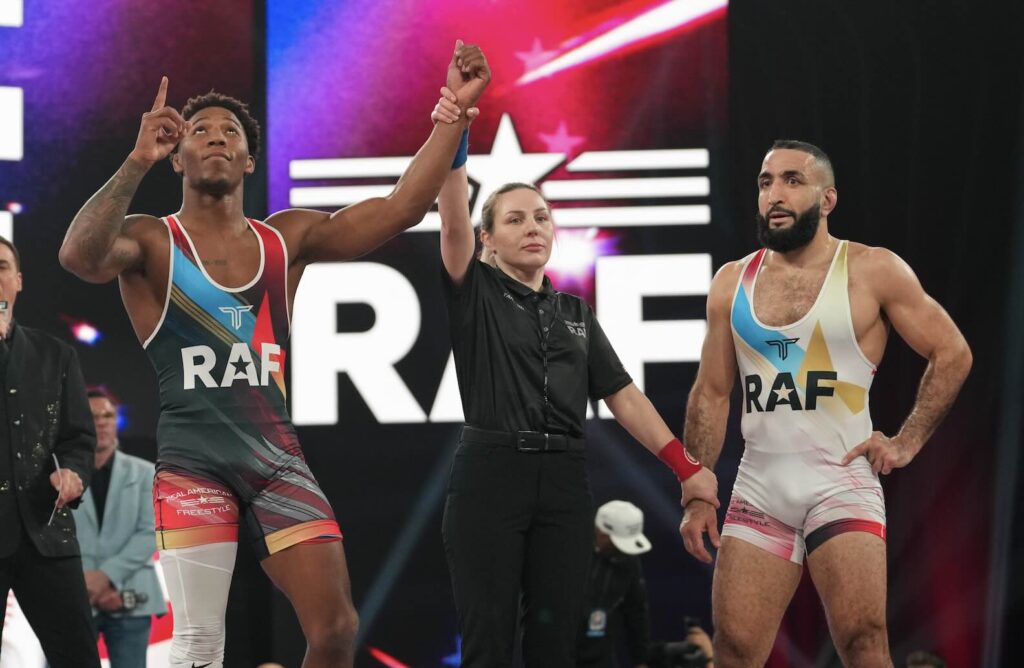
Production flourishes are part of that package. Bischoff confirms that Nitro staples are making their way into this environment, including arena staging and entrances enhanced with fireworks.
“That is probably the most obvious thing. On this last show, we brought in pyro, and we are going to continue doing that in the future. Most everything you see is inspired by my own experience in sports entertainment.”
RAF Finding a lane between WWE and UFC
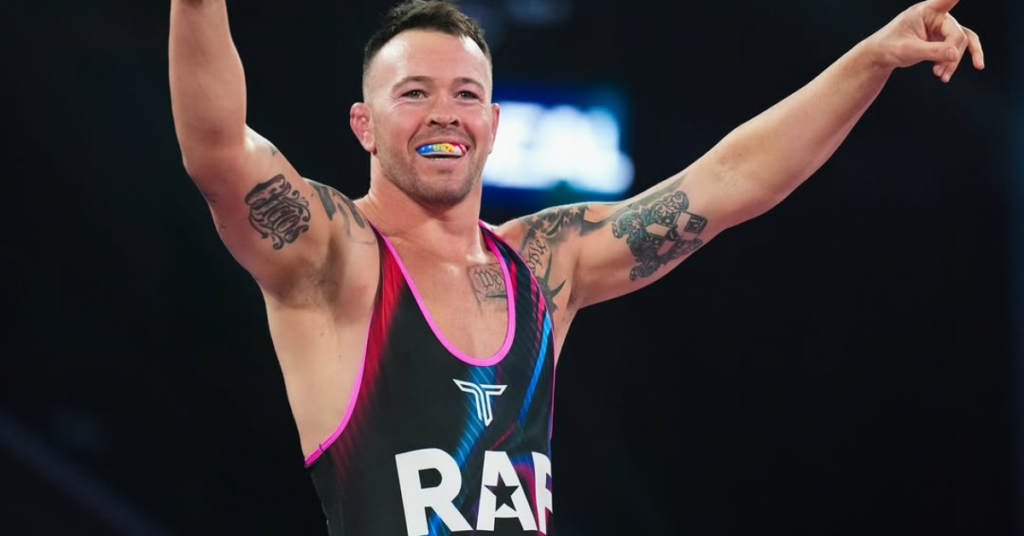
Real American Freestyle launched in 2025 out of Tampa, Florida, backed by venture capital and fronted by Hulk Hogan as commissioner and Bischoff as chief media officer. It positions itself as an unscripted freestyle and folkstyle league where results are earned, while presentation borrows from sports entertainment. That timing is deliberate: UFC’s long-term growth has normalized combat sports on mainstream television, while wrestling fans are open to new formats that still feel familiar.
“It really has. There are all kinds of metaphors people use—creating your own lane and so on—but we have certainly created our own lane here.”
Bischoff points to the last three decades, where UFC went from pay-per-view curiosity to a central property for major media partners, as clearing space for something like RAF. For him, freestyle wrestling sits at the root of that rise.
“Combat sports in general have grown so fast over the last 30 years. UFC has been around a long time, and the sport itself has been exploding for a long time, but it is really emerging now. For us to see a pathway where we can introduce a combat sport like this is exciting, because freestyle wrestling is the oldest combat sport known to man, and it is a very important part of any MMA athlete’s arsenal.”
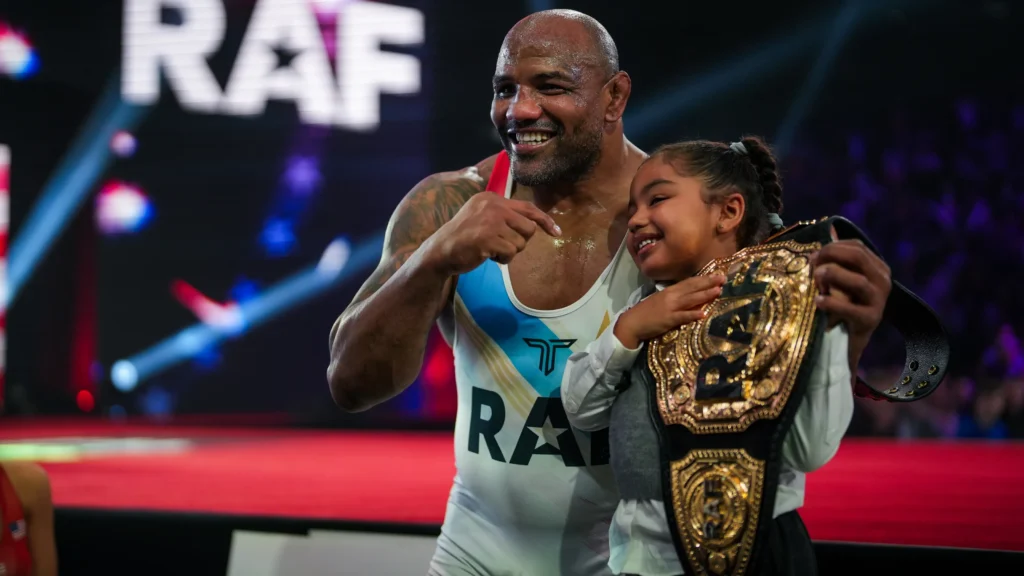
Freestyle and Greco-Roman wrestling form the base for many MMA champions and contenders, from American collegiate standouts to Russian and Caucasus stars, and Bischoff sees RAF as giving that skill set a television home. The twist is that RAF packages it with camera work, commentary and pacing designed for a live-television audience.
“If you look at a lot of the big names and legends in MMA, they come from a wrestling background. Wrestling is very much a part of MMA. All we have done is put a spotlight on it, make it more popular, put it in a format that is appealing and entertaining to watch, and boom, you have a brand-new sport. It is not a new sport, but it is a new way to watch the sport.”
Wrestling as a shared language
Bischoff agrees that freestyle wrestling travels more easily across borders than American-style pro wrestling, which depends on cultural context, promos and long-term characters. Olympic and world championship wrestling already draw audiences in Eastern Europe, the Caucasus, Iran, Japan and Central Asia, where the sport has deep roots and people often play Heart Bingo and Wiz Slots.
“That is true. Olympic-style wrestling, call it what you will, freestyle or Greco-Roman, is probably more popular around the world than it is in the United States.”
He cites the example of Dagestan, a Russian republic with about 3.1 million people that has produced a string of Olympic and world champions and where freestyle wrestling is described as a national pastime. He also namechecks the Middle East, Europe and Japan as regions with long-standing wrestling cultures and strong talent pipelines.
“If you look at Russia, Dagestan in particular, you see how many phenomenal athletes are coming out of those wrestling clubs. Throughout the Middle East there have always been great wrestlers, and the same out of Europe and Japan as well. There are some great wrestlers in Japan. Freestyle wrestling is popular all over the world.”
In that context, RAF’s challenge is less about explaining what a takedown or tilt is, and more about giving wrestlers a platform where they can get paid, build a following and still compete under rules that serious fans recognize. For Bischoff, that is where decades of TV experience meet the oldest combat sport in the rulebook. Real American Freestyle events are available to stream exclusively on FOX Nation, giving fans a dedicated home to follow the league and its developing storylines.