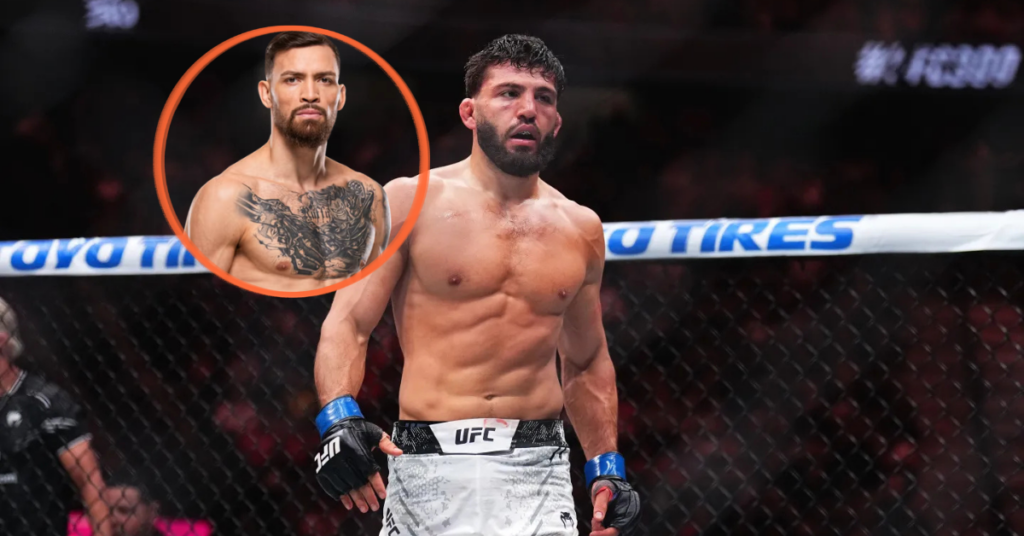
Iran vs Israel: The Long History of Combat Sports Conflict

For decades, the rivalry between Iran and Israel has extended far beyond geopolitics. On judo mats, wrestling floors, and swimming lanes around the world, Iranian athletes have been caught between their government’s strict refusal to recognise Israel and the rules of international sport, paying a heavy personal price either way.
Iran vs Israel
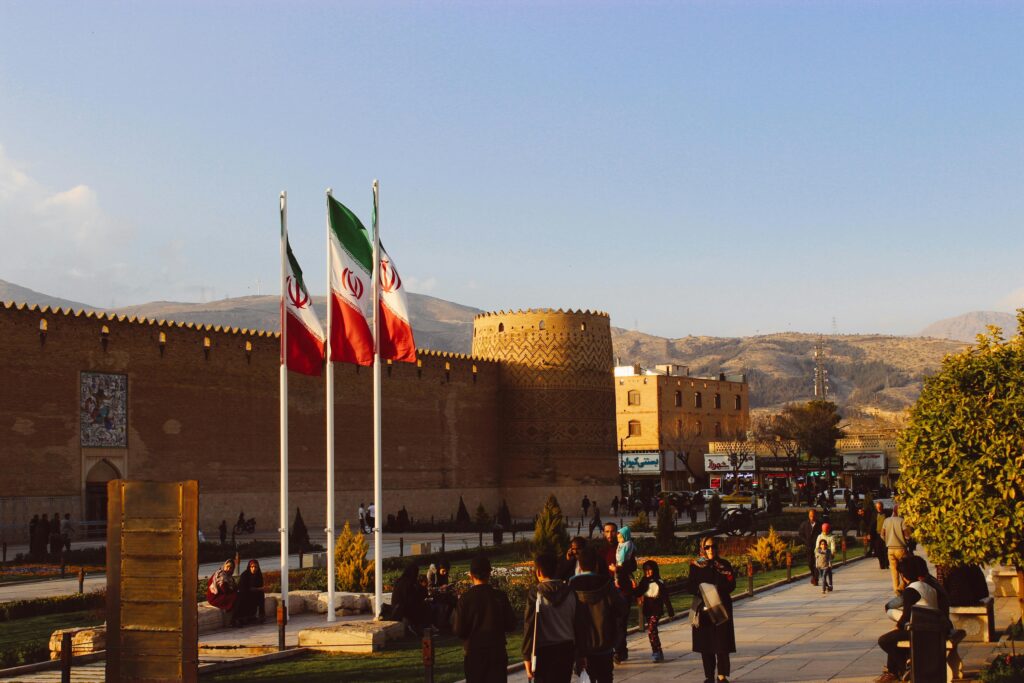
Iran‘s formal stance toward Israel solidified after the 1979 Islamic Revolution, which severed diplomatic ties between the two countries. Since then, Iranian sports organisations have operated under a government directive that forbids athletes from competing against Israelis at international events. Iranian passports have long carried a note in bold red stating that holders are “not entitled to travel to occupied Palestine.”
When a draw places an Iranian against an Israeli, the options are few: fabricate an injury, deliberately lose to a prior opponent, or simply refuse to take the mat. All three methods have appeared repeatedly over the years across multiple combat sports disciplines.
1983: The Last Legitimate Meeting
The last time an Iranian and Israeli athlete met in official international competition before the modern era of boycotts was at a wrestling match in Kiev, Ukraine, in 1983. After that contest, the wall held firm for decades, making direct sporting encounters between the two nations effectively impossible in any combat sport.
In 1983, at the FILA World Wrestling Championships in Kiev in the then-Soviet Union, Iranian Greco-Roman wrestler Bijan Seifkhani faced Israel’s Robinson Konashvili in the 74-kilogram division and won 7–4, in what is widely cited as the last official international bout between Iranian and Israeli national teams before the modern era of boycotts.
Athens 2004: A Flag-Bearer Walks Away
The incident that drew the most attention up to that point came at the 2004 Athens Olympics. Arash Miresmaeili, a two-time world judo champion who had carried Iran‘s flag at the opening ceremony, was scheduled to face Israeli judoka Ehud Vaks in the under-66 kilogram class. He was a favourite for gold.
On the morning of the bout, Miresmaeili weighed in four pounds above the limit and was disqualified. The International Judo Federation launched an investigation, and Iranian press agency IRNA had already quoted Miresmaeili as saying he “refused to play against an Israeli rival to sympathise with the oppressed Palestinian people.” The IJF examined the evidence closely but ultimately could not prove the weight miss was deliberate.
Iran’s government treated his exit as a victory. Tehran’s mayor at the time, Mahmoud Ahmadinejad, said that though Miresmaeili “did not get a gold medal, he earned eternal honour by his refusal.” The Iranian government awarded him $125,000, the same amount given to athletes who won actual gold medals at the Games.
Beijing 2008: The Empty Lane
Four years later, at the Beijing Olympics, it was a swimmer rather than a judoka who became the story. Iranian swimmer Mohammad Alirezaei was entered in the men’s 100-metre breaststroke when Israeli competitor Tom Beeri was drawn into the same heat. On the day of the race, Alirezaei’s lane stood empty.
Iranian reports cited illness as the reason. The International Olympic Committee said it would investigate, noting that if it was confirmed to be deliberate, the matter would be taken seriously. The following year, at the 2009 World Swimming Championships in Rome, Alirezaei again declined to compete in the same heat as an Israeli swimmer, this time Mickey Malul. He claimed he was tired after a long visa wait.
Wrestling, 2017: Ordered to Lose
In November 2017, the issue resurfaced in wrestling, in footage that spread widely on social media. At the under-23 World Wrestling Championship in Bydgoszcz, Poland, Iranian wrestler Alireza Karimi Mashiani was winning his quarterfinal match against Russia’s Alikhan Zabrailov and was on track to face Israel’s Uri Kalashnikov in the next round.
Mid-match, video showed his coach calling him to the side and issuing instructions. In the final 45 seconds, Karimi was tackled to the ground and rolled over repeatedly, ultimately losing a match he had led 3-2 at the four-minute mark, with the score finishing 14-3.
Iran’s sports ministry called his action “noble and heroic.” United World Wrestling saw it differently. In February 2018, the sport’s governing body banned Karimi for six months and his coach Hamidreza Jamshidi for two years for acting “in direct violation of the International Wrestling Rules.”
Judo, 2019: The Breaking Point
The most consequential moment in this history arrived in 2019, through a series of events involving judoka Saeid Mollaei, then the reigning world champion at under-81 kilograms. Mollaei had won the 2018 world title, and was one of the sport’s best-ranked athletes heading into the 2019 Paris Grand Slam in February.
At that event, Mollaei threw a match to avoid meeting Israeli judoka Sagi Muki, who went on to win gold, and then feigned injury to avoid standing on the podium with him. Iran’s athletics chief, Davoud Azarnoush, told Radio Farda at the time that he hoped “Israel will be wiped out and annihilated before the next Olympic Games.”
Then, in September 2019 at the World Judo Championships in Tokyo, the issue reached a point of no return. Mollaei had again been ordered by officials to lose before reaching a potential final against Muki. He later said that, an hour before his semifinal, Iranian intelligence officers visited his family home in Iran and also appeared at the competition venue.
Mollaei lost his semifinal to Belgium’s Matthias Casse and then lost his bronze medal match as well, finishing without a medal. He did not return with the Iranian team. Mollaei went to Germany and requested asylum.
2026: Conflict and the Sporting World
The Iran-Israel issue in sport has gained renewed attention in March 2026 following a dramatic escalation in actual hostilities. Reports indicate US and Israeli strikes targeted Iran, and Iran’s Azadi Sports Complex in Tehran, a 12,000-seat facility, was reported to have been heavily damaged. Iran’s sports minister condemned the strike as a violation of international law and the Olympic Charter.
Iran’s participation in the FIFA World Cup has been cast in doubt, the Persian Gulf Pro League suspended matches, and multiple international events have been disrupted across the region. The overlap between ongoing geopolitical conflict and sport has become unusually direct.
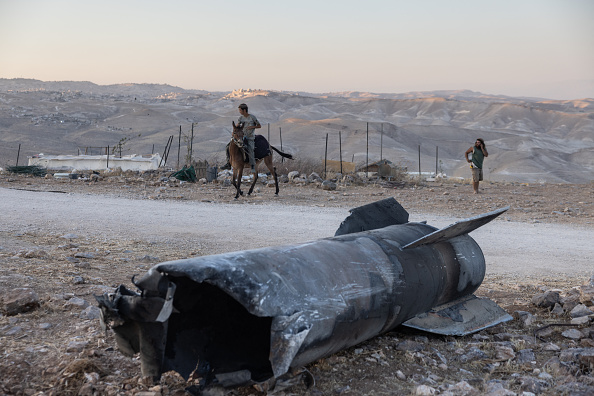
Since late February 2026, Iran and Israel have been in a direct missile war layered on top of years of proxy conflict. After a surprise US–Israeli strike campaign that hit Iranian leadership and missile infrastructure, Tehran responded by launching hundreds of drones and ballistic missiles at targets inside Israel and at US bases across the region, in what analysts now describe as a second Iran war.
Monitoring groups and conflict datasets report more than 90 attempted Iranian strikes on Israel between 28 February and 4 March alone, with roughly 20 landing in civilian areas and killing at least 10 people, while Israeli and US forces have claimed to destroy around half of Iran’s missile launchers and to intercept many incoming barrages using layered air defence systems.