Ronda Rousey on Concussions, Migraines and Life‑Changing Treatment Ahead of Gina Carano Bout


Ronda Rousey has opened up about her history with concussions and brain health as she prepares for a high‑profile return against Gina Carano, stressing that new medical findings have eased her fears about long‑term damage. Speaking on “The Jim Rome Show,” the former UFC champion explained that her decision to step away from MMA years ago was driven by unexplained neurological symptoms that experts only recently began to untangle.
When she approached UFC owner Dana White about coming back, Rousey said he pushed her to get a full evaluation. “When I first approached Dana, he was like, ‘Well, first of all, I want to make sure that you’re okay,’” she recalled. “He sent me to the Cleveland Clinic where they have a long‑term neurological fighter study going on. They checked me, did every single test possible.” There, staff at the Cleveland Clinic Lou Ruvo Center for Brain Health ran a comprehensive battery of assessments, including scans and cognitive tests, as part of an ongoing UFC‑backed study of fighters’ brain health.
Ronda Rousey Says She’s Not Dying of CTE: Concussion Fears and New Diagnosis Before Comeback
Rousey said those exams finally gave her a clear diagnosis. “I actually finally got a positive diagnosis because we’ve never really been able to figure out what’s going on with me,” she said. “From lighter and lighter hits I’m getting concussion symptoms and I lose big chunks of my vision. My depth perception and ability to think clearly just go away.” She described how even minor contact in sparring would trigger episodes that felt like concussions, with blurred vision and trouble processing what was happening in front of her.
Working with Dr. Charles Bernick and other specialists, Rousey learned that her brain scans appeared largely normal. “Dr. Bernick at the Cleveland Clinic says, ‘Listen to all of your symptoms. I’ve looked at all your scans. Your brain looks great,’” she recalled. “He was like, ‘You’re not dying. CTE isn’t coming to get you.’” Rousey added that her history of migraines and a family line that includes epilepsy pointed doctors toward a different explanation.
“He thinks I’m not actually getting a concussion every single time,” Rousey said. “He thinks it’s setting off what’s called migraine aura, where you just lose big chunks of your vision. It’s called cortical spreading depression, where your neurons get overly excited and depolarize and shut down in a wave. That’s why I lose chunks of my vision when I’m getting hit.”
Doctors explained that people who suffer from migraines can be more sensitive to impacts and may experience concussion‑like symptoms without a full‑blown concussion each time. Rousey said repeated head trauma appears to make it easier for her to trigger migraine events, creating a cycle where concussions increase her migraine risk and migraines make her more reactive to future hits.

With that diagnosis, her team turned to prevention. “To me it was like, ‘Oh my god, I’m not dying. CTE isn’t coming to get me,’” she said. “There’s actually stuff we can do about it.” She revealed that she has recently landed on a preventative migraine medication she can take before training or competition. “We just recently found a preventative migraine medication I can take ahead of time. It’s been life‑changing,” she said. “It’s been so long since I’ve had hope. I’ve been sick of being sick, sick of feeling sick… and then you feel good and then you can come back.”
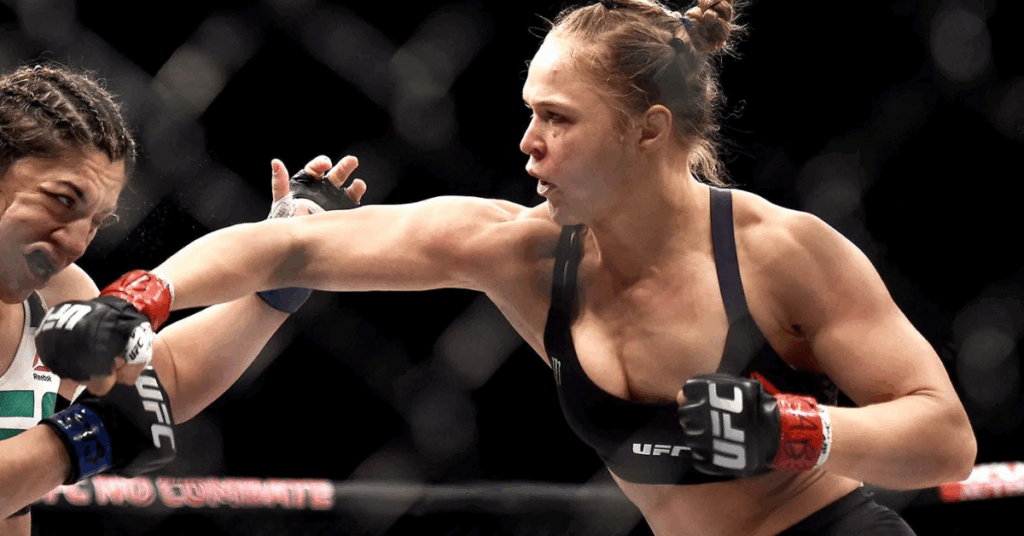
Rousey’s medical disclosures come as both she and Gina Carano face expanded neurological and concussion testing ahead of their May 16 featherweight bout at Intuit Dome in Los Angeles. The California State Athletic Commission has required extensive neurological and concussion‑battery evaluations for both fighters, reflecting heightened scrutiny around head trauma in combat sports.